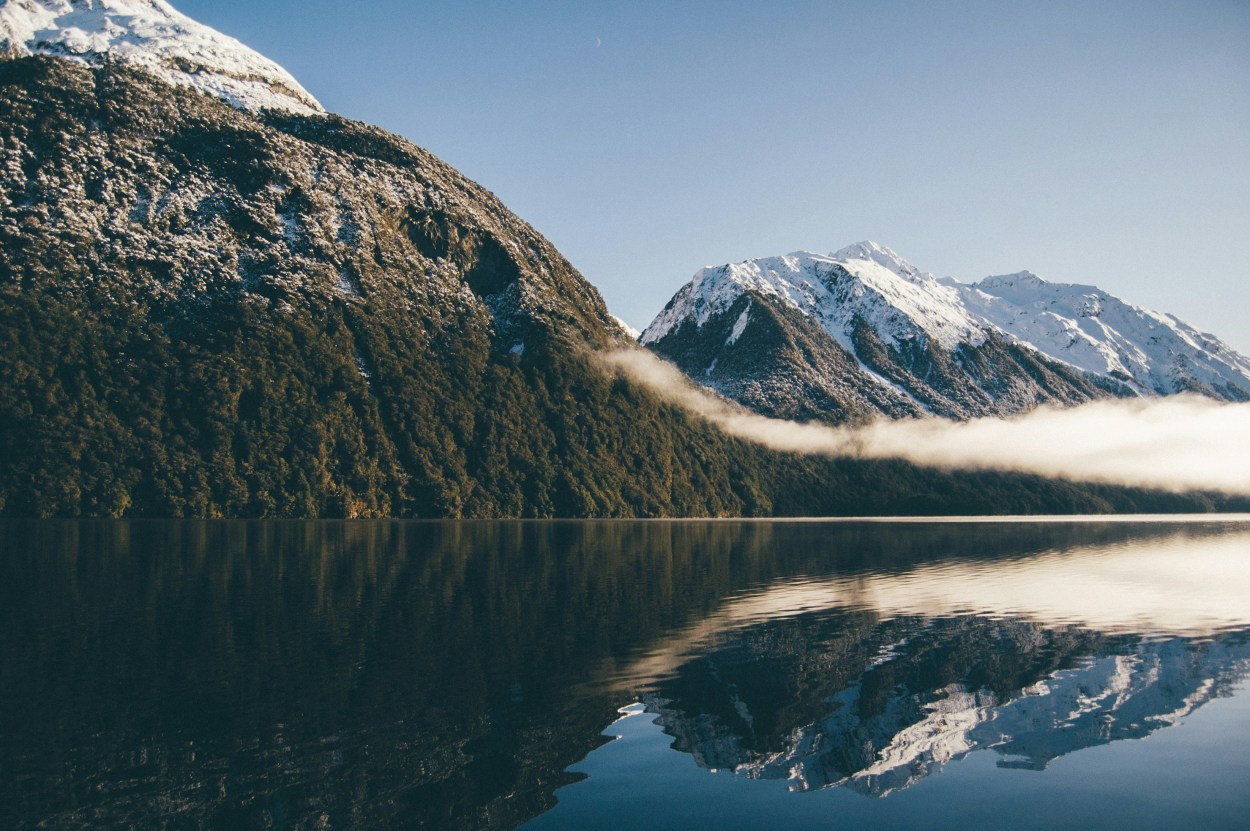
I feel most at peace and at home when I am in the hills. There is childlike joy that leaps inside me when I walk a mountain trail, awaiting the mystery that lies behind each bend. When someone tells me they “get more” from a day on the lake than a day in church, I understand it even if I do not agree with it. There is nothing unique or unexpected in finding oneself feeling close to God when surrounded by mountains and lakes and trees.
Ancient people understood that there was something holy about high places. While we recognize that the air is thinner at higher altitudes, our ancestors also recognized a different kind of thinness in the mountains. For them, what was thin was not the air but the veil between heaven and earth. The hills were a place where the division human realm and the divine realm became a little less opaque. This is why temples were often constructed on hilltops.
The prophets of Israel looked with skepticism on these “high places”. The high places were places of idolatry – turning the creation into something to be worshiped. As the Apostle Paul would later write, “They traded God’s truth for a lie, and they worshipped and served the creation instead of the creator, who is blessed forever. Amen” (Romans 1:25 CEB).
It is for this reason that we pray with the psalmist, “I lift up my eyes to the hills, from where does my help come? My help comes from the LORD, the maker of heaven and earth” (Ps 121:1, NRSV).
Do we find our help in the hills? Do we find our help among the beauty of God’s creation? No. We find our help from the One who made it. Creation, at its best, serves as a sign post to God. At its worst, it becomes a cheap substitute for God, an idol.
But animals, mountains, and trees are not our chief sign post to God. Neither the beasts of the field nor the rolling hills are made to bear God’s image. No, that is a distinction left for human beings. It is the human, not the forest, that exists to direct our attention to God.
To prefer a day in the hills over a day among the people of God is an understandable impulse, but it is also pagan. To see “God” in the face of a mountain before we see God in the face of a neighbor is the definition of pagan idolatry. It is among our brothers and sisters, among our neighbors, that we most learn to love and be loved. The beauty of a forest is that it does not need me as much as my neighbor does. The lake does not require me to give or sacrifice in the same way as my community. But it is only in community, in fellowship, amongst neighbors that I can truly discover the loving and relational character of the one true God.
This is, of course, not to say that there is no beauty, goodness, and wonder to be found in the great outdoors. There is! No one would fall for the lie if it were not mostly true. Time outdoors reminds us of the vastness of God. The lie is not that the hills do not contain beauty. The lie is that they are more beautiful than my neighbor – even my ugliest neighbor.
Our most difficult neighbors are still image bearers of God in ways no mountain peak can ever hope to be.
 The Local Pastor